
Renewable energy project finance is a loan structure repaid by the cash that a single project produces. Lenders study the power contract behind the project and the revenue that contract creates, rather than the balance sheet of the company that builds it. The project is placed inside its own company, that company signs a long term agreement to sell its power, and the agreement carries the debt.
This is how most solar farms, wind farms, and battery storage projects get built. Global energy investment is on track to reach 3.4 trillion dollars in 2026, and about 2.2 trillion dollars of that goes to renewables, grids, storage, low emissions fuels, nuclear, and efficiency, according to the International Energy Agency. The structure decides which projects reach construction and which ones stall with a signed lease and a good resource study.
Hudson’s leadership has been investing in clean energy since 2002 and has mobilized approximately 13 billion dollars across more than 25 investments in over 25 countries. The sections below explain the pieces in plain terms, then show how the structure works in a live transaction.
What is renewable energy project finance?
Project finance funds one asset at a time. The developer creates a separate company that owns nothing except that project, its equipment, its land rights, its permits, and its contracts. Lenders and investors put money into that company, and they get paid back from the electricity revenue the project earns.
Project financing is typically non recourse or limited recourse. It means the loan looks primarily to the project and its contracts for repayment, while sponsor guarantees and other support obligations may still apply. The lender takes a security interest in the project company, so if the project fails to pay, the lender can take the project itself.
Corporate finance works the other way. A company borrows against everything it owns and everything it earns. Project finance narrows the credit question down to one asset and one revenue stream, which is why the quality of the power contract matters more than the size of the sponsor.
What is in the capital stack?
The capital stack is the list of everyone who put money into the project, in the order they get paid. Cash from the project flows down that list every quarter. Three layers do most of the work.
Senior debt. This is the biggest and cheapest layer, and it gets paid first. Projects usually take a construction loan while the asset is being built, then replace it with a long term loan once the project reaches commercial operation and starts selling power. Repayment runs over many years and is sized against contracted revenue.
Tax equity and tax credits. Federal clean energy credits and accelerated depreciation have real cash value, and a developer often cannot use them. Investors supply cash in exchange for those benefits. Tax equity generally has priority over sponsor equity for specified tax benefits and cash distributions, while its relationship with the senior lender is governed by the applicable financing and interparty arrangements. It typically holds its position for six to ten years while the asset itself runs for 25 to 40 years, according to the American Council on Renewable Energy.
Sponsor equity. This is the developer and its investment partners. Sponsor equity gets paid last, carries the most risk, and earns the largest share of the upside if the project performs. This is the layer where a firm like Hudson builds long term value.
The order of that list is the whole negotiation. Every dollar of cheap senior debt a project can support lowers the cost of capital and raises the return to the owner, so structuring the stack well is worth more than shaving a few cents off the equipment price.
What is an offtake agreement, and why does it decide the deal?
An offtake agreement is the contract that says who buys the power and at what price. The most common version is a power purchase agreement, often called a PPA. A utility, a corporation, or a retail energy provider agrees to buy the output for a set number of years at a set rate.
That contract is what the lender is really underwriting. Underwriting means judging how likely the money is to come back. Three questions drive it: how creditworthy the buyer is, how long the contract runs, and how the price is set. A 15 year contract with an investment grade utility supports far more debt than the same project selling into the open market at whatever the price happens to be that hour.
Offtake is also a business in its own right. Horizon Energy, a Hudson platform in Japan, was built to serve as the long term power buyer for renewable assets in the post feed in tariff market, giving those assets the contracted revenue that financing depends on.
What is the debt service coverage ratio?
The debt service coverage ratio, or DSCR, compares the cash a project produces to the loan payments it owes. A DSCR of 1.30 means the project generates one dollar and thirty cents for every dollar of principal and interest due. The extra thirty cents is the cushion that protects the lender when a year runs cloudy, windless, or short on availability.
Lenders set a minimum DSCR and then size the loan to match it. Contracted solar and wind projects commonly carry minimums in the range of 1.20 to 1.50 times, while projects exposed to market prices are asked for 1.50 times and well above, since their revenue moves. Raise the required ratio and the loan shrinks. Lengthen and strengthen the offtake contract and the loan grows.
That single number connects everything. The power contract sets the cash flow, the cash flow sets the DSCR, the DSCR sets the debt, and the debt sets how much equity the sponsor needs to find.
How do clean energy tax credits turn into cash?
Federal tax credits are a major part of the capital in a United States renewable project. There are two ways to convert them into money the project can spend.
The first is a tax equity partnership. An investor with a large tax bill, usually a bank or an insurer, joins the project company and receives the credits and depreciation in exchange for cash up front. Banks put more than 20 billion dollars a year into these structures, and the American Council on Renewable Energy reports that recapture events touched under one percent of surveyed investments with no foreclosures reported across respondents.
The second is a direct sale. Since the Inflation Reduction Act, credits can be sold for cash under Section 6418 of the tax code, which opened the market to buyers who never wanted to be partners in a solar project. Crux, which runs a marketplace for these deals, measured roughly 42 billion dollars of transferred credits in 2025 and 63 billion dollars of total tax credit monetization across transfers, tax equity, and hybrid deals, up 27 percent over the prior year.
Timing now matters as much as structure. Transferability survived the One Big Beautiful Bill Act, and Section 6418 remains in place, according to Thomson Reuters. Under current IRS guidance, applicable wind and solar facilities that began construction before July 5, 2026 generally must satisfy the Physical Work Test and the applicable continuity requirements, unless they qualify under a limited exception or are placed in service before January 1, 2028. That calendar puts construction timing at the center of how these deals get structured.
What makes a renewable energy project bankable?
Bankable means a lender will actually fund it. Six things carry the most weight.
- A strong offtake contract with a creditworthy buyer and a tenor long enough to cover the loan.
- A sponsor with a record of finishing projects like this one.
- Proven technology from a manufacturer that will still exist to honor its warranty.
- Site control, permits, and a signed interconnection agreement, since a project that cannot connect to the grid cannot sell power.
- A resource study and production forecast that a third party engineer will certify.
- Complete, organized documentation, because diligence delays cost real money when a tax deadline is approaching.
Crux lists offtake strength, sponsor track record, proven technology, secured land and interconnection rights, and lender ready documentation as the core tests a project has to pass.
How Hudson structures project finance
Hudson calls this work value engineering: building the financial architecture that lets a strong project attract the right capital and hold up through a full market cycle. The clearest recent example is Heritage Energy Holdings.
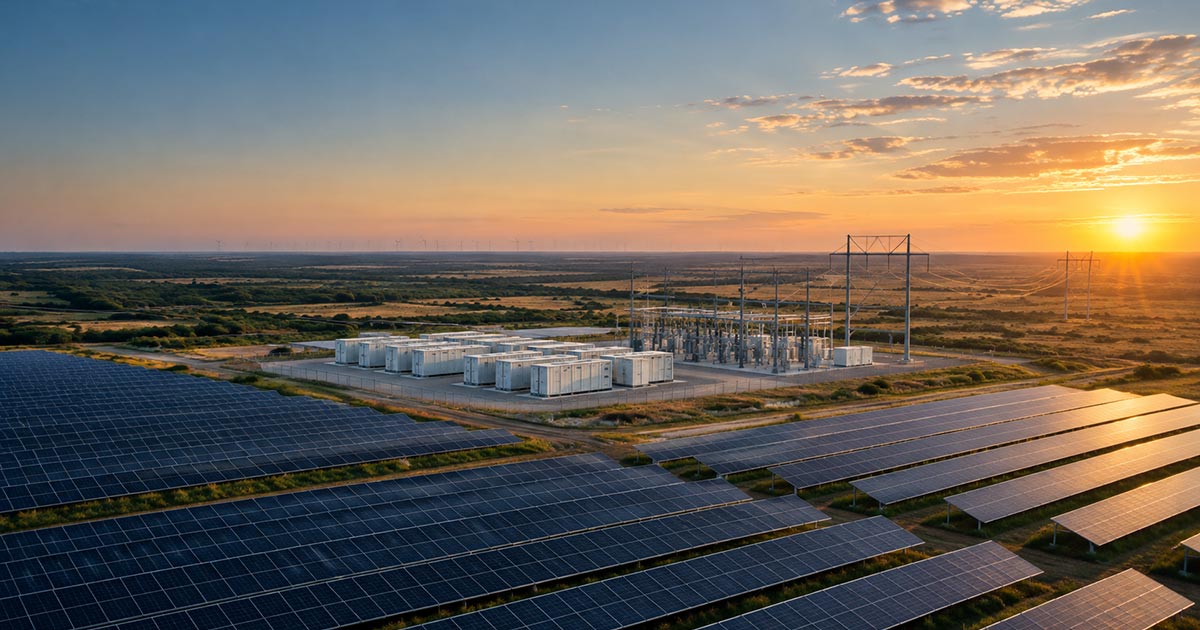
In February 2026, Hudson acted as exclusive advisor and co sponsor in connection with a 28.5 million dollar senior secured financing for Heritage, provided by Eagle Point Credit. Hudson partner Dustin Muscato led the transaction. The capital funds a network of battery storage and solar projects under 10 megawatts each across the Texas ERCOT market, with plans to scale across dozens of sites.
The structure carried three problems at once. Heritage runs an integrated model that pairs licensed retail electricity operations, through its affiliation with Heritage Power, with distributed generation and virtual power plant capability. Aggregating many small assets lets the platform reach utility scale while moving faster than the interconnection queue for large projects. The financing also had to acquire safe harbored battery assets and move them cleanly onto the Heritage platform before a year end deadline. Solving those together is what project finance structuring looks like in practice.
The same discipline shows up across the portfolio. Hudson’s leadership helped found Sunlight Financial in 2014 and took the company public in 2021. Propel, launched through SolSource Solutions with TriBeam Financial, applies the same thinking to residential solar and battery financing after the Inflation Reduction Act. Horizon Energy holds the offtake side in Japan.
Across that history, the record adds up to approximately 13 billion dollars mobilized, more than 25 investments, and platforms in solar, storage, distributed generation, hydrogen, and carbon.
Where the market stands in 2026
Project finance lending to United States clean energy reached roughly 120 billion dollars in 2025, including early stage capital, bridge lending, and construction debt, an increase of 5.8 percent over 2024, according to Crux. Renewable power investment worldwide is running near 665 billion dollars in 2026, with solar alone at 365 billion dollars, per the International Energy Agency.
Demand is pulling in the same direction. Load growth from data centers, electrification, and industry is raising the value of firm, flexible power close to where it is consumed, which is exactly the profile of a distributed platform like Heritage. Capital is available for projects that are structured to receive it.
Work with Hudson
Hudson works with management teams on capital structuring, strategic development and institutional positioning, including as advisor, co sponsor or co investor, where applicable. Explore the Hudson track record, or reach out to the team directly.
Frequently asked questions
What is renewable energy project finance?
Renewable energy project finance funds one project through its own company, repaid by the cash that project earns. Lenders underwrite the long term power contract and the project revenue rather than the sponsor balance sheet. Solar, wind, and battery storage projects are financed this way around the world.
How is project finance different from corporate finance?
Corporate finance lends against a whole company, its assets, and all of its earnings. Project finance lends against one asset and the contract that sells its output. Repayment comes from project cash flow, and the lender holds security in the project company itself.
What debt service coverage ratio do lenders require?
Lenders on contracted solar and wind projects commonly set minimums between 1.20 and 1.50 times cash flow to debt payments. Projects that sell power at market prices are asked for 1.50 times and higher. The ratio determines how large a loan the project can support.
Can clean energy tax credits still be sold in 2026?
Yes. Transferability under Section 6418 remains in place after the One Big Beautiful Bill Act, and Crux measured about 42 billion dollars in transferred credits during 2025. Applicable wind and solar facilities that began construction before July 5, 2026 generally must satisfy the Physical Work Test and the applicable continuity requirements.
What makes a renewable energy project bankable?
A bankable project has a creditworthy power buyer under a long contract, an experienced sponsor, proven equipment, secured land, permits, and interconnection, a certified production forecast, and complete documentation. Lenders test all of it before funding, and gaps in any one area stop a financing.
Sources
International Energy Agency, World Energy Investment 2026: https://www.iea.org/reports/world-energy-investment-2026
Crux, 2025 Market Intelligence Report on clean energy finance: https://www.crux.com/reports/2025-market-intelligence-report
Crux, guide to renewable energy project finance: https://www.crux.com/blog/understanding-renewable-energy-project-finance
American Council on Renewable Energy, The Risk Profile of Tax Equity Investments, 2026 edition: https://acore.org/resources/the-risk-profile-of-tax-equity-investments-2026-edition/
Thomson Reuters Institute, green energy tax credits after the One Big Beautiful Bill Act: https://www.thomsonreuters.com/en-us/posts/sustainability/green-energy-tax-credits-survived/
Business Wire, Hudson Sustainable Group secures 28.5 million dollar financing for Heritage Energy Holdings: https://www.businesswire.com/news/home/20260219180503/en/Hudson-Sustainable-Group-Secures-$28.5-Million-Strategic-Financing-for-Heritage-Energy-Holdings
Breaking Into Wall Street, debt service coverage ratio in project finance: https://breakingintowallstreet.com/kb/project-finance/debt-service-coverage-ratio/
Hudson Sustainable Group track record: https://hudsonsustainable.com/track-record/